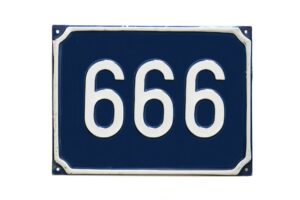
The number 666 has long captured human curiosity, often evoking a sense of mystery and foreboding. Known widely as the "number of the beast," it carries layers of historical, cultural, and religious significance that have evolved over centuries. This article delves into the multifaceted meanings associated with 666, exploring its origins, interpretations, and the warnings it symbolizes in various contexts.
From ancient texts to modern pop culture, 666 continues to be a symbol that provokes reflection and debate. Understanding its roots and the perspectives surrounding it can shed light on why this number holds such a powerful place in collective consciousness today.
Understanding the Historical Origins of the Number 666
The earliest and most influential reference to the number 666 appears in the Christian New Testament, specifically in the Book of Revelation 13:18. This apocalyptic text describes 666 as the "number of the beast," a cryptic symbol linked to evil and the end times. Scholars believe the number was originally a coded reference to Emperor Nero, a notorious persecutor of early Christians, using a Hebrew numerology system called gematria, where letters correspond to numbers.
Beyond Revelation, the number 666 has been found in various ancient manuscripts and inscriptions, often associated with ominous or negative connotations. Its origin is deeply embedded in the historical context of Roman imperial power and early Christian resistance, making it more than just a random number but a symbol charged with political and spiritual meaning.
Symbolic Interpretations Across Different Cultures
Across cultures, 666 carries diverse symbolic interpretations that extend beyond its biblical association. In some East Asian traditions, numbers hold specific meanings linked to luck or fate. While 6 is often seen as a harmonious number, the repetition three times can amplify its significance, sometimes viewed positively or neutrally depending on context.
In Western esoteric traditions, 666 is sometimes associated with concepts of materialism and human imperfection. Numerologists and occultists have interpreted the number as representing the physical world or the balance between good and evil. These interpretations demonstrate how 666 transcends a singular meaning, adapting to various cultural lenses that shape its symbolism.
Religious Perspectives on the Meaning of 666
The dominant religious interpretation of 666 comes from Christianity, where it is commonly viewed as a symbol of the Antichrist or ultimate evil. Many Christians see the number as a warning against false prophets and a call to spiritual vigilance during times of moral crisis. This interpretation emphasizes 666 as a marker of deception and spiritual danger.
Other religious traditions typically do not attribute special significance to 666, but some groups have adopted its symbolism in their teachings or rituals. For example, certain occult practices may use the number to represent rebellion against established religious norms. Overall, religious perspectives vary widely but often focus on the number’s role as a symbol of warning or moral challenge.
Common Myths and Misconceptions About 666
One common myth is that 666 is inherently evil or cursed, leading to widespread fear known as hexakosioihexekontahexaphobia—the fear of the number 666. This misconception has fueled superstitions, such as avoiding addresses, phone numbers, or license plates containing 666. However, the number itself does not possess intrinsic evil but gains meaning from cultural and religious contexts.
Another misconception is that 666 directly identifies a specific individual or entity in the present day. While some have tried to link the number to political figures or celebrities, these claims are speculative and lack solid evidence. Understanding these myths helps demystify the number and encourages a more nuanced view beyond sensationalism.
Modern Usage and Representation in Popular Media
In contemporary culture, 666 appears frequently in movies, music, and literature, often as a shorthand for evil or the supernatural. Horror films and heavy metal music, in particular, have embraced the number to evoke dark or rebellious imagery. This modern usage reinforces the number’s association with fear and taboo but also sometimes as a symbol of countercultural identity.
Additionally, 666 is used in marketing and branding to create shock value or intrigue, demonstrating how its meaning has evolved into a cultural icon rather than strictly a religious symbol. This widespread representation keeps 666 relevant and recognizable, influencing how new generations perceive its significance.
The Warning Aspect: What 666 Signifies Today
Today, 666 often serves as a cautionary symbol, warning against moral corruption, deceit, or spiritual complacency. In religious circles, it reminds believers to remain alert to false teachings and ethical challenges. Beyond religion, it can symbolize the dangers of unchecked power, materialism, or societal decay.
The warning inherent in 666 is not only about fear but also about awareness and critical thinking. It invites individuals to question authority and remain vigilant about the forces shaping their lives. This dual role as both symbol and warning underscores its enduring impact in contemporary discourse.
Frequently Asked Questions About 666 Meaning and Warning
Q1: Why is 666 called the "number of the beast"?
A1: The phrase comes from the Book of Revelation in the Bible, where 666 is described as the number identifying the beast, often interpreted as a symbol of evil or the Antichrist.
Q2: Is 666 always considered bad in all cultures?
A2: No, while it is viewed negatively in many Western contexts, some cultures interpret the number differently or do not assign it special meaning.
Q3: Can 666 be linked to specific people today?
A3: Attempts to link 666 to modern individuals are speculative and lack credible evidence; the number’s original meaning was likely symbolic rather than literal.
Q4: Why do some people fear the number 666?
A4: The fear, known as hexakosioihexekontahexaphobia, stems from cultural and religious associations of the number with evil and misfortune.
Q5: How is 666 used in popular culture?
A5: It is often used to evoke themes of horror, rebellion, or the supernatural in movies, music, and literature, sometimes as a symbol of counterculture.
Conclusion: Reflecting on the Significance of 666
The number 666 embodies a rich tapestry of meanings shaped by history, religion, and culture. Far from being a simple symbol of evil, it reflects complex human concerns about power, morality, and identity. Its historical origins as a coded reference to oppressive authority reveal how numbers can carry profound symbolic weight beyond their numeric value.
In modern times, 666 continues to function both as a warning and a cultural icon, inviting reflection on the forces that influence society and the individual. Understanding its layered significance encourages a more thoughtful engagement with the symbols that shape our worldview.
Exploring the meaning and warning of 666 offers insight into the ways humans interpret symbols and confront the unknown. Whether approached as a religious emblem, cultural artifact, or popular motif, 666 remains a compelling number that challenges us to consider deeper questions about good, evil, and the nature of warning itself.